Caring for pastels and charcoal
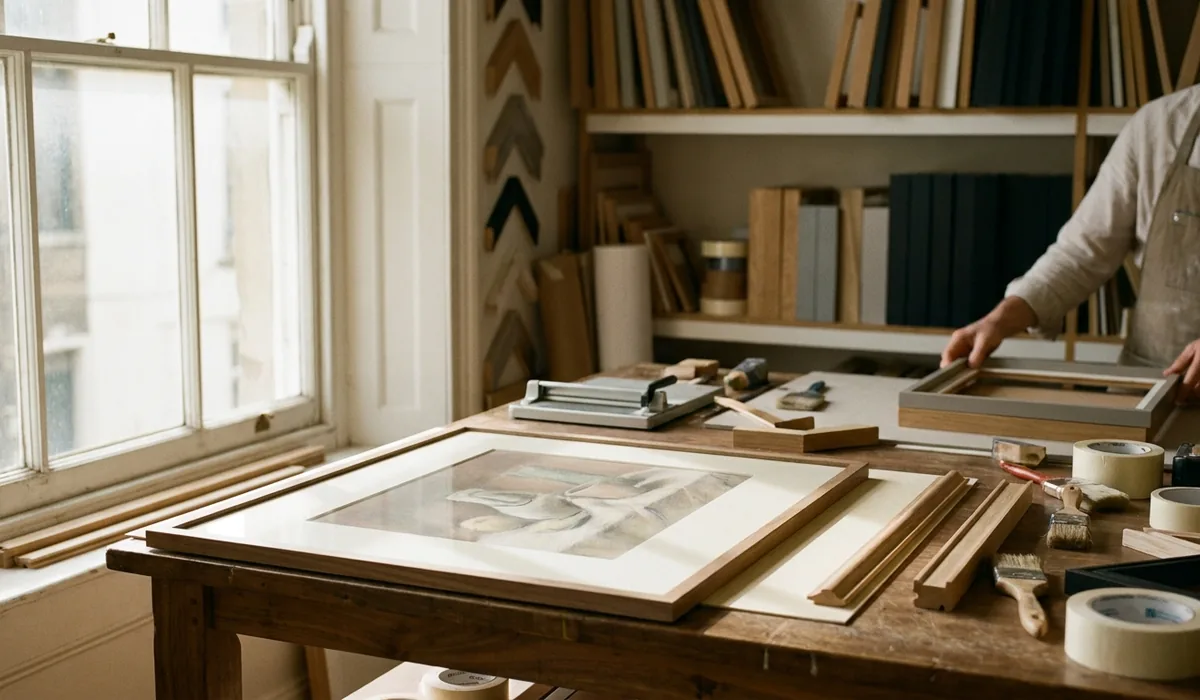
Pastel, charcoal, chalk, and soft graphite are what conservators call friable media: the pigment sits on the surface as loose particles and never truly binds to the paper. That is what gives them their softness and depth — and it is exactly why they need framing quite different from a print or a photograph. Handled casually, a beautiful pastel can shed its surface into the bottom of the frame within a year.
Never let anything touch the surface
The first rule is that nothing may rest against the artwork — not a mat, not the glazing, nothing. Any contact lifts pigment. We frame friable work with the surface held well clear of the glass, using either a deep double mat or hidden spacers so there is a real air gap across the whole image. It looks the same from the front; the difference is entirely in the build behind the glass.
With pastel, the framing is structural. It is holding the artwork off everything else.
Glass, never acrylic
This is the one place we are absolute: pastel and charcoal go behind glass, never acrylic. Acrylic builds up a static charge, and static will pull loose pigment straight off the paper and onto the inside of the sheet. Glass carries no such charge. It is heavier and we accept that; the alternative is watching the image migrate onto the glazing. If you own a framed pastel behind acrylic, it is worth having it reframed.
A gentle catch at the base
Even beautifully made pastels release a little dust over the years. In a proper build there is a small concealed well or lip at the bottom of the mount that quietly catches any fall, so it collects out of sight rather than as a line along the bottom of the image. It is invisible from the front and it makes a real difference over decades.
Living with one
- Hang it somewhere it will not be knocked, and move it flat, never face-down.
- Keep it out of direct sun and away from damp — friable media are sensitive to both.
- If the glass ever needs cleaning, take the piece down and clean the glass separately if you can; never press on the front.
- If you see pigment gathering inside the glass, bring it in — it usually means the build has failed and the surface is touching something.
Framing friable work is some of the most careful framing we do, and it is worth doing once, properly. If you have a pastel or charcoal that has never been framed — or was framed quickly years ago — bring it in and we will build it to last. Our note on glazing covers the glass-versus-acrylic question in more general terms.